Another year has come and gone, and as tradition holds, the City of Wayzata has taken stock of its accomplishments in its 2024 Annual Report. Presented to the City Council in early February, the report showcases the strides made across departments and underscores the city’s ongoing commitment to preserving Wayzata’s character while fostering progress.
A Dream Realized: The Panoway Lakewalk
Few projects in Wayzata’s history have been as anticipated as the PanowayLakewalk, a vision over a century in the making. Officially opened on July 13, the 1,200-foot-long Lakewalk has transformed the community’s connection to Lake Minnetonka. Funded through a combination of state bonds, private donations, and city redevelopment funds—including tax-increment financing (TIF)—the Lakewalk came to life without increasing property taxes for residents.
“We’re incredibly proud of this project,” said City Manager Jeffrey Dahl.
Complementing the Lakewalk, the city also completed new community docks, offering improved access to the lake while implementing a pay system to help offset maintenance costs.
Strengthening Community Engagement
For the first time, Wayzata hosted a dedicated State of the City Address, separate from the Chamber of Commerce event. The gathering, held at City Hall, provided residents with an opportunity to hear directly from Mayor Johanna Mouton and City Manager Dahl about the city’s progress and priorities. A packed house signaled strong public interest in maintaining an open dialogue between city leadership and the community.
Another highlight from 2024 was the city’s continued push to diversify revenue sources and reduce reliance on property taxes. Through careful financial planning, municipal operations, including the Wayzata Bar & Grill and Wine & Spirits, generated over $500,000 in net revenue—funds that help offset city service costs.
Investing in Parks, Public Safety, and Infrastructure
Wayzata’s commitment to maintaining high-quality public amenities was evident throughout the year. The Bell Courts were reconstructed, introducing four pickleball courts to meet growing demand, with much of the funding secured through grants. Additionally, the city completed the installation of solar panels on municipal buildings, a long-term investment expected to save Wayzata approximately $853,000 over the next 25 years.
Public safety also saw important advancements. The Wayzata Police Department earned the Minnesota Chiefs of Police Excellence in Innovation Award, recognizing the contributions of Sergeant Jason Gehrman and his K-9 partner, Loki, in search-and-rescue efforts.
Sergeant Jason Gehrman and Loki. Submitted photo.
Meanwhile, the fire department successfully onboarded three new firefighters, increasing the department’s strength to 29 volunteers—an impressive feat at a time when many communities struggle to recruit for similar roles.
Looking Ahead to 2025
As city officials look toward the new year, Wayzata remains focused on resident engagement, sustainability, and fiscal responsibility. Plans are underway to explore enhancements to Klapprich Park, a beloved recreational space, and to expand community outreach initiatives.
“We’re incredibly proud of what we’ve accomplished and grateful for the council’s leadership and providing the support we need. I hope the community appreciates that. I know they do and we’re just grateful to be in this community. 2025 is a new year, new council, new opportunities, new challenges,” stated City Manager Jeff Dahl.
As her term comes to a close, MayorJohanna Mouton prepares to step away from a decade of public service in Wayzata. Beginning as a City Council Member, Mouton gained a reputation for her thoughtful approach and dedication to the city’s needs. Over the past four years, she has served as Wayzata’s first woman mayor, guiding the community through significant decisions and challenges.
In this final podcast episode, Mouton looks back on her time in office, sharing insights into her leadership journey and the experiences that have shaped her tenure.
Mayor Johanna Mouton, Jude Hale APWA, Eric Lembke APWA and Wayzata Public Works Director Mike Kelly. Submitted photo.
At the December 17th Wayzata City Council meeting, the city celebrated a momentous achievement as the Panoway on Wayzata Bay project was officially recognized with the 2024 Minnesota Project of the Year Award by the American Public Works Association Minnesota Chapter (APWA-MN). Representatives from the APWA presented the award to the City, emphasizing the project’s transformative impact and excellence in public works innovation.
Public Works Director and City Engineer Mike Kelly introduced the presentation, highlighting the collaborative effort that made the project possible. “In October, the city submitted an application for the Public Works Project of the Year award, and we were fortunate enough to be selected,” Kelly remarked. “This project, including the lake walk, docks, and other improvements…” has truly reconnected our community to Lake Minnetonka.
Eric Lembke, Chair of the APWA-MN Awards Committee, and Jude Hale, President of the APWA’s Minnesota chapter, led the presentation. Hale expressed the organization’s appreciation for the opportunity to recognize Wayzata’s accomplishments. Hale stated the award showcases the vision, collaboration, and dedication involved in the Panoway project. It is a model for public works excellence across the state.
Hale elaborated on the rigorous criteria used to evaluate the submissions, including innovation in construction management, safety performance, community engagement, environmental sustainability, and the project’s overall value to the public works profession. “This project in and of itself, I can clearly, standard confidently tell you that this one checked all those boxes,” Hale noted.
The Panoway project’s vision centered on reconnecting Wayzata with its lakefront, overcoming significant challenges such as the presence of a 150-year-old railroad corridor. The first phase transformed Lake Street with a pedestrian-friendly design, including a lakeside plaza and enhanced access to the Dakota Regional Trail. Lembke shared his personal appreciation for the improvements, stating, “…the improvements make that such a more pleasurable experience for us to come from our community to yours, enjoy the restaurants and shops after we get done with our biking trips…”
The project’s second phase further solidified its impact by focusing on the lakefront boardwalk and community docks. The design emphasized environmental sustainability and innovative construction techniques, which were pivotal in navigating the unique challenges posed by the site’s proximity to the railroad.
The Panoway project was made possible through significant funding partnerships, including millions in private contributions. Lembke highlighted the city’s remarkable public outreach efforts, which ensured collaboration with residents, businesses, and regulatory agencies throughout the project’s development.
The APWA-MN Project of the Year Award recognizes excellence in public works projects across Minnesota. Panoway’s recognition in the Structures category underscores its innovative approach and lasting impact on the Wayzata community. As the award was handed over to Kelly, he humbly accepted on behalf of the team, saying, “On behalf of the entire team that did this, thank you very much.”
MayorJohanna Mouton stated, “I wanted to thank you Mike. You have been an integral part of not only the city, but as director of public works and our head engineer instrumental in getting this project along with so many other staff members but well deserved and thank you for seeing this very one getting us our first award I know we’ll have many more to come.”
The Panoway project has not only redefined Wayzata’s relationship with Lake Minnetonka but also serves as an inspiring example for other communities aiming to enhance their public spaces.
The City of Wayzata invites residents to celebrate and honor MayorJohanna Mouton at a farewell open house on Monday, December 18. The event will be held at City Hall from 5:00 to 7:00 p.m., with a brief program planned for 6:00 p.m.
Mayor Mouton, who decided not to seek re-election, has served as a dedicated leader during her time in office. The open house provides an opportunity for residents and colleagues to come together and recognize her significant contributions to the city.
The evening will feature light refreshments, along with time to reflect on the accomplishments and progress made during Mayor Mouton’s leadership.
The event is open to all, ensuring that the entire Wayzata community can take part in this celebration of service and commitment.
The Wayzata City Council, in a 3-1 split vote, approved $165,830.98 in change orders for the PanowayLakewalk project during their November 12 meeting. The vote highlighted ongoing concerns about project oversight, contingency planning, and the transparency of financial decisions.
Change Orders and Costs
The approved change orders addressed unforeseen construction issues, including:
Pile Obstruction ($18,498.15): Removal of a boulder obstructing pile installation.
Ice Breaking ($22,228.93): Clearing ice to allow for precast beam placement during winter.
Hydrocrane Setup ($23,091.97): Required crane work to place beams near the railroad due to winter conditions.
Remaining Acceleration ($60,441.93): Costs tied to an additional barge and crane to expedite work.
Railing Stiffeners ($41,570): Reinforcements added to address structural concerns with cable rail tensioning.
These costs pushed the project beyond its contingency funds, raising questions among council members about planning and accountability.
Budget Overview
City staff reported that the Panoway project remains $55,436 under budget, aided by a $258,971 sales tax credit and reallocated resources. However, the original contingency—a modest 3.8% of the total budget—was exhausted early, necessitating council approval for subsequent expenses.
Some council members questioned the decision-making process, with Council Member Ken Sorensen stating, “If this is work that wasn’t in the contractor’s contract, and it should be very clear if it was or wasn’t, the city probably owes them that money.” Sorensen continued, “I think the issue is, why do we incur these change orders and have they been appropriately scrutinized?”
Discussion on Accountability
Concerns were raised about the transparency of decision-making, particularly regarding the responsibilities of designers and contractors.
Council Member Jeff Parkhill remarked, “I think maybe we were a little optimistic on the 4% contingency. That may have been oversight by anybody involved with this. I’m feeling the same way about not being involved in some of these decisions, and for example maybe we could have gotten rid of the step downs if we knew they were going to cost us, x amount per year, an amount that wasn’t budgeted for and an additional $63,000. I know in building there is always unforeseeable things…“
“At this point I don’t think we have a choice, I think we have to pay for this but I think my biggest request is some transparency and clarity. We are up here forced to make a decision after the fact and it’s really not fair to us, it’s not fair to the community either,” continued Parkhill. “Watching some of these budgets go through it’s like holy smokes… it’s a bureaucracy.”
City staff acknowledged that some issues stemmed from unforeseen conditions, such as DNR permitting delays and deeper-than-expected piling requirements. Bob Janssen from Kraus-Anderson added that the project’s unique nature introduced risks that were difficult to anticipate.
Council Member Molly MacDonald questioned the step down change orders and work that appears to have been stopped, “I’ve noticed some of this skeleton down there that has been started, there’s a large piece of equipment that is sitting behind a sidewalk closed sign for quite some time.” MacDonald continued, “These design changes have not been seen by this body, will that skeleton down there, will that always be there?“
Mouton stated in response, “Decisions are being made outside of the purview of the council, I think is what I am hearing from council member MacDonald, and this council will be asked to approve the cost, we haven’t seen the design revisions, we don’t know any information about it, again, seems like there is a bit of a disconnect, being asked to approve something after the fact… it’s too little too late.“
Future Implications
The council also discussed pending change orders, particularly related to step-down adjustments for seasonal removability, which are under review. Council members expressed frustration at not being consulted earlier, with Mayor Mouton stating, “I don’t think I’ve ever seen this process play out this way.” Mounton continued, “I’m not comfortable saying yes to $165,000, this is work that is already done.“
Council Vote
The motion passed 3-1, with Mayor Mouton opposing. She expressed concerns about relying on funds not yet received and criticized the piecemeal presentation of information. Council Member Parkhill supported the motion but shared dissatisfaction with the process, saying, “We’re left to approve bills for work already completed, and that’s a difficult position to be in.”
Despite the challenges, the council remains committed to completing the Panoway project within budget and delivering a high-quality public space for Wayzata residents. This decision underscores the need for improved planning and communication as the project enters its final phases.
This article has been updated to reflect broader comments by the council members.
At a recent city council meeting, Blake Sandvold, Chair of the Wayzata Conservancy, provided updates on the Panoway project, its funding, and future phases. Despite enthusiasm over progress made, MayorMouton raised questions about outstanding financial commitments and future fundraising efforts.
$3,000,000+/- Raised from 300+ Donors
Sandvold began by emphasizing the Conservancy’s success in completing phases one and two of the Panoway project, including the Lake Street Plaza and the Lakewalk and Docks. He underscored the Conservancy’s mission of fostering public-private partnerships and its role in advocacy, project funding, and ongoing maintenance. To date, the Conservancy has raised approximately $3 million from over 330 donors, including individuals, families, corporations, and foundations.
“Generosity is alive and well,” Sandvold said, pointing to community events like Spring Splash and collaborations with local nonprofits.
Looking forward, Sandvold detailed plans for phase three, which includes restoring the Section Foreman House as a Lake Shore Learning Center, developing an Eco Park, and enhancing Depot Park. Initial fundraising efforts have secured $500,000 for this $10 million phase, about half of which has been contributed by Mr. Sandvold’s own family.
Financial Concerns from Mayor Mouton
While the presentation celebrated achievements, Mayor Johanna Mouton raised questions about fundraising shortfalls. Specifically, she expressed concerns over a delayed $120,000 pledge tied to dock construction.
“We relied on those funds,” Mayor Mouton stated. “Our numbers are based on having that money in the bank, and we don’t have it.”
The delayed pledge, originally expected in June, has left the city in a a bit of a challenging position as it faces upcoming financial obligations, including an $91,000 payment due in January.
Sandvold assured the council of his confidence in the donor’s intent, citing personal and confidential reasons for the delay. “It hasn’t swayed me from believing that it won’t come through,” he said, while acknowledging the challenges inherent in fundraising.
Balancing Future and Current Phases
Council member Molly MacDonald also questioned the decision to allocate restricted funds for phase three while obligations for phase two remain outstanding. Sandvold explained that such practices are common in fundraising, where donors often earmark contributions for specific components of a project.
Mayor Johanna McCarthy pressed further, saying, “It seems counterintuitive to fundraise for a future phase when current obligations are unmet. Shouldn’t we focus on finishing phase two first?”
Sandvold responded by highlighting the complexities of donor preferences, noting that some contributions are restricted to specific phases.
Procedural and Fiduciary Responsibilities
MayorMouton and other council members reiterated their fiduciary responsibility to Wayzata taxpayers. “We’re accountable when we’re putting the money out and relying on pledges,” Mouton said. “If these pledges don’t materialize, it puts us in a precarious position.”
City Manager Jeffrey Dahl assured the council that ongoing discussions with the Conservancy include updates on funding events and progress. However, the council signaled the need for more clarity on when and how funds will be secured to cover current obligations before committing further resources to phase three.
Looking Forward
Despite the challenges, Sandvold expressed optimism about the Conservancy’s ability to meet its goals. “This project is something I believe in deeply,” he said. “We’re continuing to engage donors and build momentum for the final phase.”
The council plans to revisit the issue in upcoming meetings, with a focus on balancing immediate financial responsibilities and long-term ambitions for Wayzata’s lakefront.
At the October 8th meeting, the Wayzata City Council voted against enacting an emergency moratorium, opting instead for a standard zoning ordinance that will impose a 90-day moratorium on new development in the R-3A district after two readings and publication–sometime in November. This decision primarily revolves around the exploration of garage placement, particularly the trend of constructing front-load garages with short driveways versus traditional back-load garages with longer driveways.
Moratorium Area. City of Wayzata.
Council member Molly Macdonald has been a key proponent of this initiative, voicing concerns about the impact of front-load garage designs on her neighborhood and the surrounding R-3A district north of Wayzata Boulevard. She emphasized the importance of examining how these design choices affect hardcover calculations, home sizes, and the overall character of the community.
While those with pending permit applications may continue with their plans, residents should note that the average building permit review process takes approximately six weeks. Consequently, a significant influx of new applications prior to the moratorium taking effect is not expected. The city plans to utilize the upcoming 90-day period to thoroughly assess zoning regulations related to garage placement and ensure that future developments align with the desired neighborhood character.
Public Input
KC Chermak voiced concerns about the moratorium. City of Wayzata.
KC Chermak, a seasoned local homebuilder and resident of Wayzata, addressed the City Council during a recent meeting to discuss the proposed moratorium on development in the community. With nearly three decades of experience in homebuilding and having worked under four different mayors and numerous council members, Schermack brought a wealth of knowledge to the discussion.
He expressed concerns that the moratorium might be a “knee-jerk reaction,” indicating that such a significant measure should be carefully considered. “If you do decide to do some sort of a moratorium, please state that you’re being very serious about it and you’re trying to send a message to people on the other side,” he urged the council.
Chermak emphasized the thorough evaluations conducted by previous city leaders, asserting, “The system has been heavily evaluated by your predecessors… and they’ve done a wonderful job.” He stressed that the current regulatory framework has been developed with the community’s best interests in mind and that changes should be based on concrete evidence of problems rather than assumptions or complaints.
Instead of halting development, Chermak advocated for a more constructive approach to improve architectural standards in the city. “We cannot mandate good architecture…, but we have plenty of rules that help us get to a good finish line,” he explained, suggesting that incentives could be offered to encourage better design and more thoughtful construction. He argued that the focus should be on fostering community engagement to identify and solve potential issues rather than resorting to a moratorium, which he felt could be counterproductive. “If there is [a problem], let’s find it… not just the stopgap that really doesn’t… solve anything,” he stated, urging the council to explore long-term solutions that would benefit the community.
Chermak concluded by expressing his commitment to improving the city and his pride in being part of the Wayzata community. He encouraged the council to consider alternative methods that would engage the community and enhance the overall living experience in the area. “I just want you to hopefully take what I’m saying to heart… I believe there’s other ways to get an outcome that would be much more appealing and come across much more engaged with the community,” he remarked.
Council Discussion
Ken Sorensen had reservations. City of Wayzata.
Council member Ken Sorensen voiced a cautious stance during the discussion of the proposed moratorium on redevelopment in the R-3A district. After personally touring the affected neighborhood, he acknowledged the contrasting appearances between new and older homes and the importance of preserving neighborhood character. However, he expressed concerns over the severity of the proposed action. “I’m very supportive of the study that we’re doing… but it does seem reactive,” he remarked, hinting that a moratorium might be an extreme measure to address the issue.
Sorensen questioned whether an emergency moratorium was necessary, pointing out that the neighborhood’s development trends are not new. “The declaration in front of us states that there is an immediate pressing and emergency need to impose a moratorium. I’m not sure I agree with that,” he said, casting doubt on whether the issue truly warranted halting all development.
He also highlighted the potential unintended consequences of freezing development, such as financial impacts on residents and property investors. “If you made an investment to purchase one of these properties, sell one of these properties, invest in one of these properties… the monthly load on that is pretty significant,” he stated. Ultimately, he expressed reservations about supporting the moratorium, citing the possibility of broader, unintended impacts and the optics of singling out one neighborhood for such a drastic measure. “It feels a little heavy-handed to me,” Swanson concluded.
Alex Plechash supported the moratorium. City of Wayzata.
Council member Alex Plechash expressed strong support for the proposed moratorium, emphasizing the broader impact of new developments on surrounding neighbors. He pointed out that while developers may build and move on to their next project, the effects of those developments remain long-term for the neighborhood. “When a home is put there that is dramatically different than the other homes surrounding it, it changes the character of the neighborhood,” the council member stated, underscoring the ripple effect that a single development can have on the community.
Reflecting on past decisions, Plechash admitted that while zoning regulations were originally put in place with good intentions, unforeseen consequences have emerged over time, particularly in more compact areas. “I think we have made mistakes in the past, unintentional,” he acknowledged, noting that those mistakes have now played out and highlighted the need for reassessment.
Despite a general aversion to moratoriums, Plechash saw this as an opportunity to prevent further harm, explaining, “As much as I hate moratoriums, in this case, I would be in favor of it because I think we could stop a wrong before it happens.” He recommended the moratorium take effect immediately, while offering a small concession to a developer who had a pending permit, suggesting the moratorium begin at the close of business the following day to give the developer a chance to finalize their paperwork. In their view, 90 days was a reasonable period to sort out the issues, particularly with winter approaching, which would naturally slow development activities. He concluded by expressing full support for the moratorium as a necessary step to protect the character of the neighborhood while the city reconsiders its zoning regulations.
Molly MacDonald supported the moratorium. City of Wayzata.
Council member Molly MacDonald emphasized that the push for the moratorium is rooted in real concerns, stating, “This issue and these ideas haven’t come from nowhere.” MacDonald highlighted the significant changes in their neighborhood, noting that 17 homes have been torn down in the last five years, prompting a deeper examination of community impacts. She acknowledged the need to balance the rights of property owners with the experiences of current residents who are witnessing substantial alterations to their surroundings.
MacDonald expressed a desire to look at the building code more holistically, suggesting it might be too restrictive and could encourage less desirable types of construction. “I want to look at it and say, okay, we made these determinations in ’08… so that’s not that recent,” she stated, advocating for a review of zoning regulations that could foster better architectural outcomes. She concluded by expressing optimism that the 90-day moratorium would serve as a catalyst for discussions on improving the building code to benefit both developers and the community.
Mayor Johana Mouton supported the moratorium. City of Wayzata.
MayorJohanna Mouton reflected on her long-term experience in the neighborhood, stating, “I too have seen just a staggering amount of change.” She noted that while lot sizes remain the same, the desires of homeowners have evolved significantly over the years, leading to a need for a reassessment of zoning regulations.
Expressing support for the moratorium, they acknowledged the financial implications for homeowners looking to build new homes, saying, “I’m very sympathetic to that.” Mayor Mouton emphasized that the goal of the moratorium is not merely to impose restrictions but to explore various solutions, including potential accommodations like water credits and permeable pavers, while striking a balance between being restrictive in some areas and less so in others. She concluded by noting that the 90-day period would allow the council to assess whether they are moving in the right direction.
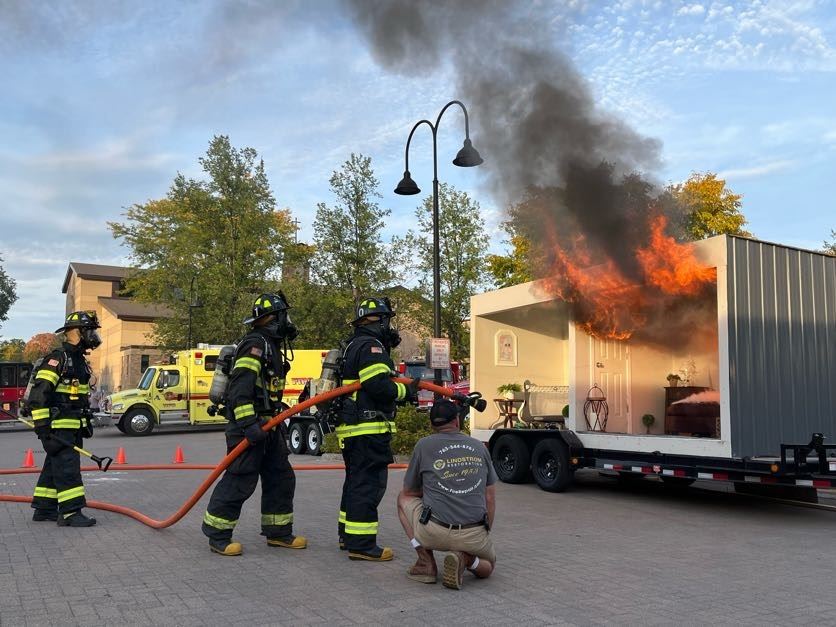
Mark your calendars, folks! This coming Monday, October 7, from 4 p.m. to 6 p.m., the City of Wayzata is throwing open the doors to City Hall for an event that’s sure to ignite community spirit. The Wayzata Showcase, formerly known as Public Safety Day, will feature a little bit of everything—from thrilling fire demonstrations to hot dogs on the grill.
The event will take place right outside City Hall, located at 600 Rice Street E, and promises something for everyone and is hosted by the Wayzata Police and Fire Departments. Whether you’re looking to learn about fire safety or just want to see the kids’ faces light up with some bounce house fun, you won’t be disappointed. In fact, the whole family can get in on the action with face painting, K9 demonstrations, and of course, a chance to get up close with the fire trucks, squad cars, and public works equipment at the always-popular “Touch-a-Truck” display.
Wayzata Fire Chief Kevin Klapprich is especially excited about this year’s showcase, saying the goal is to bring neighbors together while also educating the community about fire safety.
Wayzata Fire Department. Copywright Wayzata.com Reuse without consent prohibted.
Before the excitement kicks off, MayorJohanna Mouton will deliver a brief message to attendees, setting the tone for the evening and highlighting the importance of public safety in Wayzata.
So, bring the kids, grab a bite, and check out the firefighters in action as they put on a fire demonstration that’s sure to be a hit. It’s not just an event; it’s a way for the city to come together, meet the public safety teams, and celebrate what makes Wayzata such a special place.
Whether you’re a longtime resident or new to the area, the Wayzata Showcase is a can’t-miss opportunity to connect with your neighbors and learn more about how the city works to protect and serve its community.
Mayor Johanna Mouton discusses the Public Art Steering Committee. Image courtesy City of Wayzata.
On Tuesday, September 17, 2024, the Wayzata City Council voted to approve the creation of a Public Art Steering Committee, a step aimed at integrating public art into the city’s public spaces and community life. The council unanimously adopted Resolution 38-2024, formally establishing the committee.
The new committee aligns with Wayzata’s 2024-2026 Strategic Plan, which prioritizes sustaining community character and pride through artistic initiatives. Parks and Environment Planner Nick Kieser, who presented the proposal, emphasized the importance of public art in enhancing the city’s cultural and aesthetic appeal.
The Public Art Steering Committee will consist of five to seven members, appointed by the City Council, including local residents, business owners, and representatives potentially from organizations such as Blue Water Theatre and Minnetonka Center for the Arts. High school students from Wayzata School District may also serve on the committee.
Over the next year, the committee will develop a mission statement, goals, and bylaws. Their responsibilities will include researching funding options, identifying potential public art projects, and outlining a work plan that aligns with the $50,000 budget allocated by the City Council.
The city will begin advertising for committee positions in October, with the expectation that the positions will be filled in January and the committee will present recommendations towards the end of 2025.
“This is great to see come to fruition,” stated MayorJohanna Mouton. “I know councilmember Plechash has been a strong proponent and a vocal proponent of establishing an art committee, and this interim step of assembling a steering committee to see which direction we want to go in… I think it’s a great step…”
Residents may apply in the upcoming committees and board selection process the City holds annually.
In a dramatic turn of events on the final day of candidate filings, MayorJohanna Mouton has withdrawn from the mayoral race, paving the way for a three-way contest between former Council Member Jeff Buchanan, former MayorBarry Petit, and former Council Member Andy Mullin.
Mouton filed her affidavit of candidacy on July 30th as well.
Buchanan and Petit filed their affidavits of candidacy on August 13., before the 5 p.m. deadline.
Their last-minute entries have set the stage for a competitive race for Wayzata’s mayoral seat.
Asked why she withdrew her name from the race, Mouton stated, “The choice stems from a desire to embrace new professional opportunities that have recently presented themselves. With the new opportunities that lie ahead, I no longer feel that I can provide the level of time that is required.”
Meanwhile, the two open City Council seats will be filled by Council Member Alex Plechash and soon-to-be sworn-in Council Member Ken Sorensen, as they were the only candidates to file for the positions.
Both will be officially elected to the Wayzata City Council in November.





You must be logged in to post a comment.